A suitable feedstock
Characterize the residual stream, recover suitable recyclable materials, and define the preparation and blending needed for conversion.

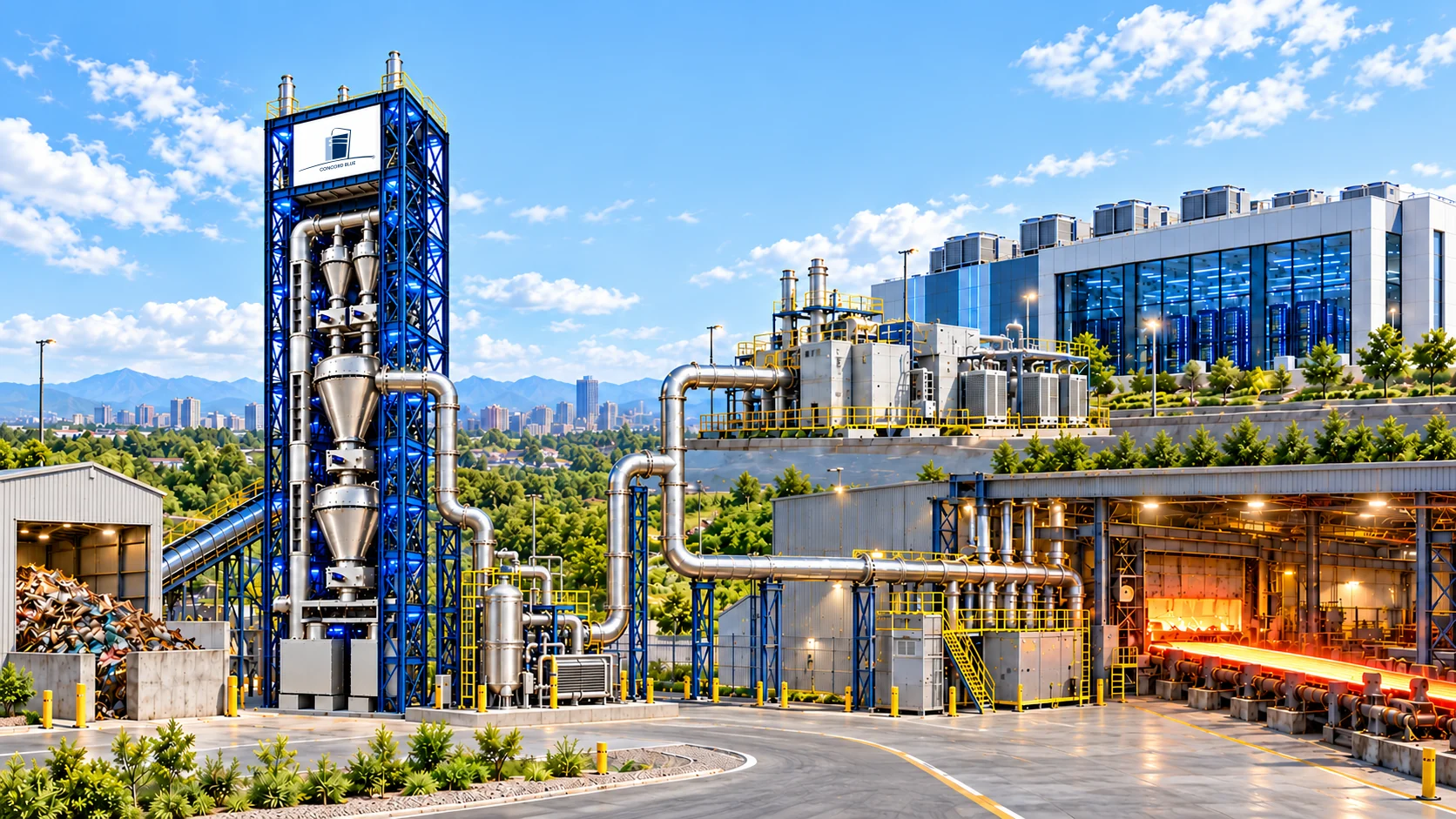
Turn suitable residual waste and biomass into a local energy resource. Concord Blue’s syngas platform connects waste conversion with power, heat, hydrogen and fuel production.
Explore the pathway ↓Waste-to-energy encompasses different conversion routes. Concord Blue uses advanced gasification: steam thermolysis followed by staged gas-phase reforming. The resulting hydrogen-rich syngas becomes the intermediate energy product, with downstream systems selected for the intended use.
Characterize the residual stream, recover suitable recyclable materials, and define the preparation and blending needed for conversion.
Match the plant to local heat, power or product demand. Proximity connects resource security with a practical energy use.
Develop permitting, residue management, emissions controls, operations and economics alongside the conversion process.
No. It is a broader category. Concord Blue’s conversion core uses indirectly heated steam thermolysis and staged reforming; process heat is supplied by a separate heat-generation system.
No. Feedstock acceptance depends on composition, moisture, ash, contaminants, preparation and the project’s permits.
No. Renewable classification and lifecycle carbon performance depend on the biogenic and fossil content of the feedstock, the process and the applicable methodology.